
Myths about Pilates – Part 1
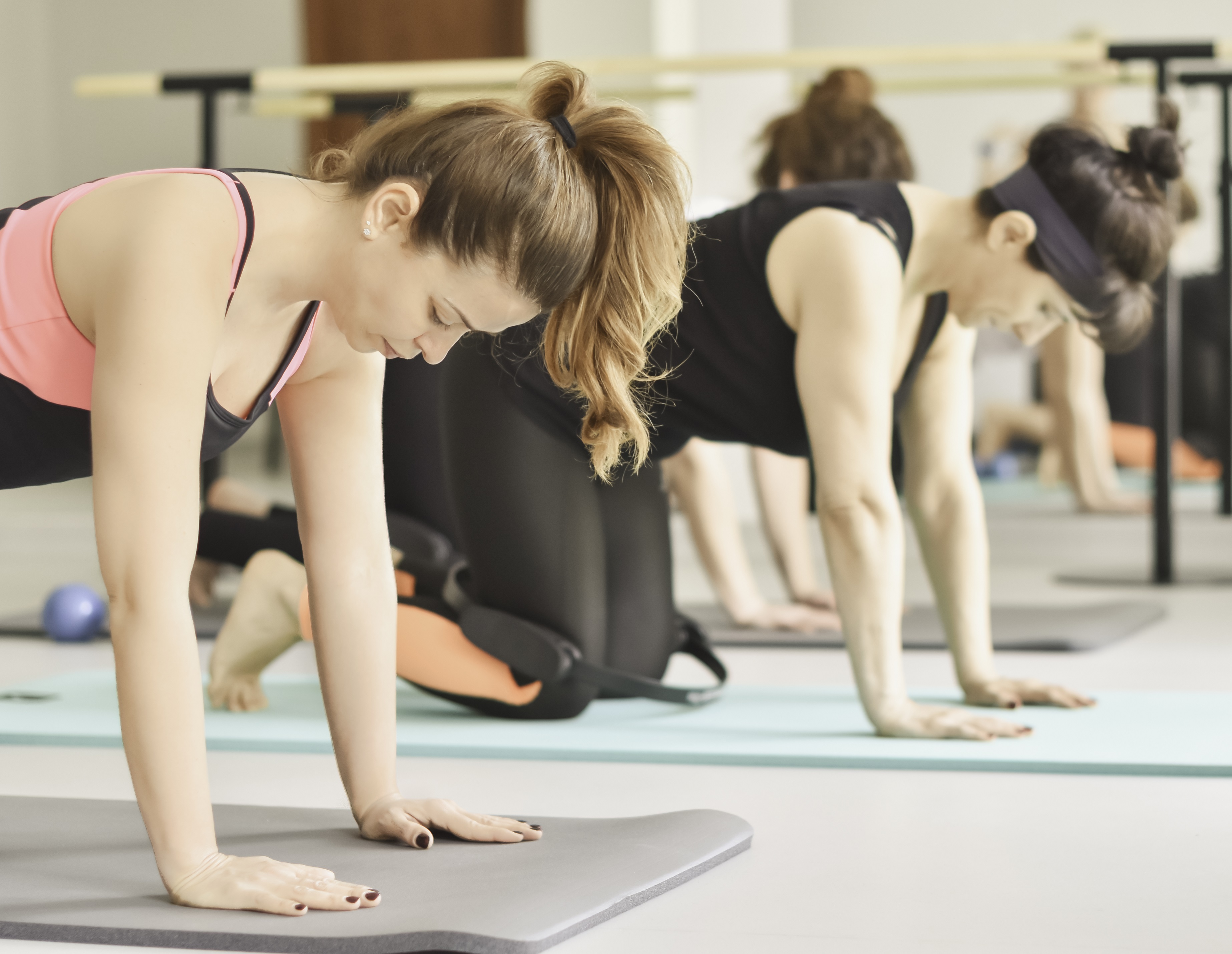
It's fantastic that Pilates is gaining more and more popularity. However, the more something is talked about, the more misinformation comes to light. This is no different with Pilates. The yoga craze was the last to be accompanied by such misleading information, and now all signs point to Pilates being the latest victim.
Let's look at the misconceptions circulating about today's most popular form of exercise, Pilates!
1st misconception: Pilates is good for fat burning
A 2006 study showed that body weight and body fat mass did not significantly change in adult women who regularly practiced Pilates but did not engage in other forms of exercise. An older study from 2004 revealed that although flexibility increases, body composition does not change, even after six months of training.
So, if the goal is calorie burning and weight loss, we can achieve better results with running, cycling, etc.
Yet, Pilates has an important role in fat burning. By making us more resistant to injuries, it allows us to train more consistently. And experience shows that this form of movement beautifully shapes the body.
2nd misconception: Pilates is only for women
This is completely false. Not only is it not just for women, but it wasn't even developed for women! Joseph Pilates, the developer of Pilates, boxed and was an athlete in his youth, and at one point in his life, he also tried his hand as a military trainer. Pictures of Pilates in his eighties also show that he was a true macho. Men have always played an extremely important role in the development and shaping of Pilates.
It is true that Pilates enjoys great popularity among women, but there is nothing in the exercise form itself that would make it "feminine." Its adaptability makes Pilates popular with women, as it can be practiced regardless of body type and condition. In addition, it has now become common for many dancers to choose a Pilates instructor career after finishing dancing. And female instructors attracted many, many female students.
Thanks to Pilates becoming increasingly accepted in the fitness world, we can now see more men in Pilates classes, but there are still many who have not managed to overcome this false stereotype.
3rd misconception: Pilates requires special equipment
It is a fact that there are pieces of equipment developed for Pilates, but these are not absolutely necessary. Springs, resistance bands, bars, and balls can help us with our workout and break the monotony if we get bored with "bare" Pilates.
All basic Pilates movements can be performed with just a mat. There is only one thing that is absolutely necessary, and that is motivation itself – accessories, as their name suggests, only complement the exercises.
4th misconception: Pilates makes us much stronger
Pilates primarily strengthens the abdominal and back muscles, and the exercises were developed for these areas. If our fitness level is relatively low when we start Pilates, these muscles will noticeably strengthen.
However, this also depends on the style and the instructor. If you work with machines, equipment, and an instructor, you can challenge your body appropriately. You won't have muscles like you would from lifting weights, but you will be able to move and control your own body beautifully, so if you want to do strength training alongside it, you will be able to do that more effectively too.
In our next article, four more misconceptions will be discussed. We will talk about who can teach Pilates, which muscles work best during the workout, why many people consider Pilates easy, and what annoys Pilates instructors the most.