
Pilates – the harmony of body, mind, and soul
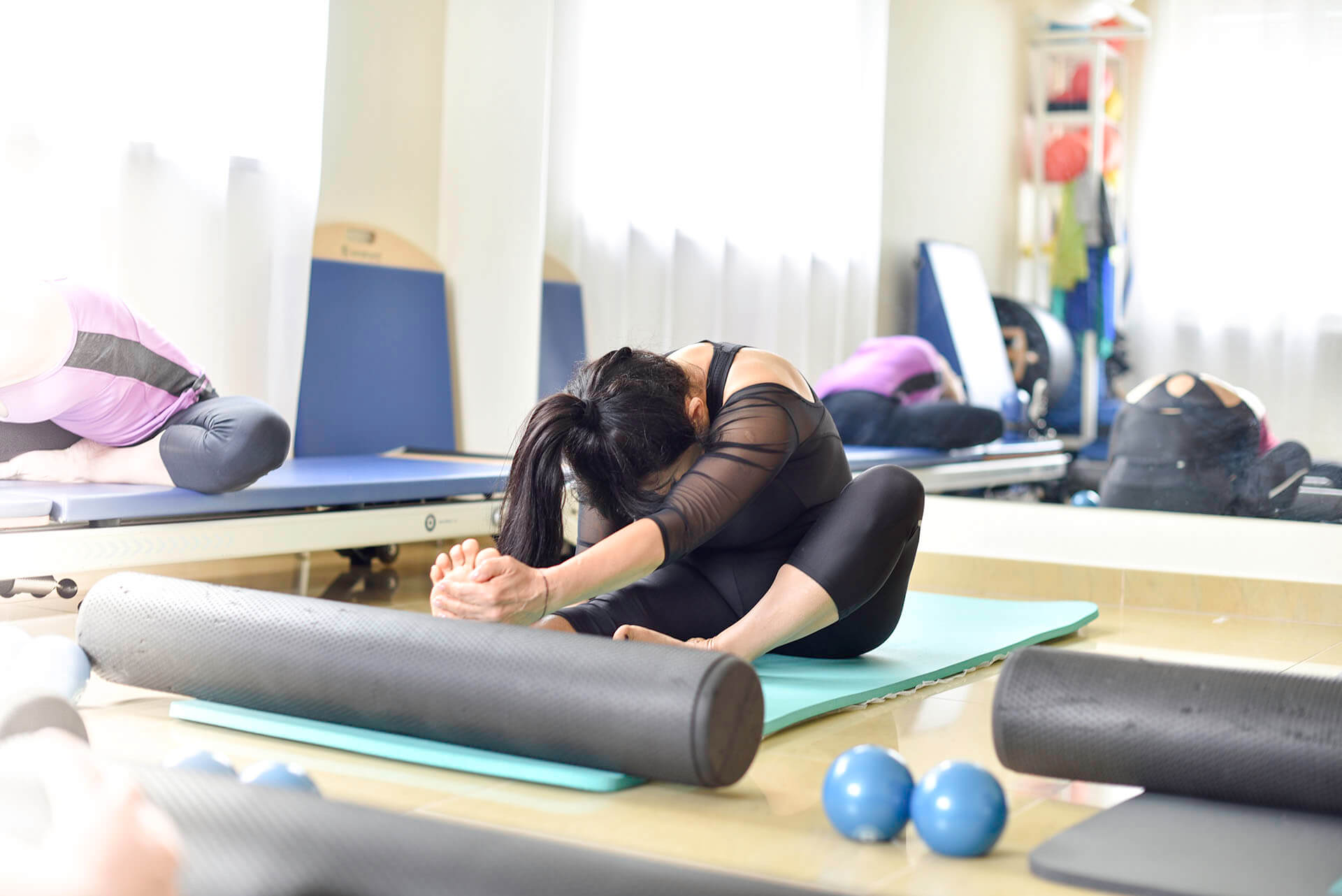
Pilates – the harmony of body, mind, and soul
Pilates has countless benefits. With regular practice, the most visible change occurs in the muscles.
Less visible, but no less significant changes include increased strength, balance, and flexibility. These benefits make Pilates an indispensable part of most rehabilitation programs, and also ideal for older age groups.
In addition to the benefits listed above, most Pilates practitioners have also experienced the following:
- higher energy levels,
- more restful sleep,
- improved well-being.
Everyone can learn Pilates and enjoy its benefits, even those who are "blessed with two left feet."
The effect of Pilates on the body
There isn't a single part of our body that Pilates doesn't engage. Even though the focus is on the core, all other muscles are still working. The only downside to this is muscle soreness the next day, but a good stretch can help a lot with that.
Unlike other forms of exercise, Pilates does not require any level of fitness, so anyone can do Pilates. Pilates is low-intensity (low pace, meaning no jumping), gentle (does not put too much pressure on muscles and joints), and modifiable (can be adapted to our own needs and abilities). In addition, we can choose from countless exercises, so finding the right one for us will not be a problem.
The effect of Pilates on strength
One of the biggest advantages of Pilates is that we can get stronger without becoming "bulky." This is most important for women, as short, high-volume muscles (which can be gained through strength training) are not particularly feminine (according to some). With Pilates, however, our individual muscles will not overdevelop. We will become just as strong through it as through other forms of exercise – only our figure will be slimmer, and our muscles will be toned.
Pilates increases functional fitness. This means that what we learn in a Pilates class, we will be able to use in real life. Daily tasks become easier as we become stronger. With Pilates, we will not learn movements that we cannot use in other contexts. Pilates is also recommended for those suffering from back pain, as it can even help eliminate the problem completely! It achieves this by strengthening the core muscles – the abdomen, back, and pelvis. A strong core results in correct posture, which in turn alleviates (or completely eliminates) back pain. It is also excellent for prevention – we don't have to wait until problems arise to start Pilates!
A strong core also affects flexibility. Many people mistakenly believe that they must be flexible to perform Pilates exercises. However, the opposite is true, as Pilates itself makes us flexible!
The effect of Pilates on the brain and soul
Just a few visits to the nearest Pilates studio are enough to find some level of inner peace. Thoughts clear up, and our brain rests, because during the 50-55 minutes we do Pilates, we don't think about the things that make us tense.
Pilates also makes us more energetic, as muscles relax and endorphins are released during the workout. Like most workouts, after Pilates, we will feel lighter.
We cannot leave restful sleep off the list either, as Pilates has already helped many people struggling with insomnia. This is also due to the fact that during Pilates, we focus exclusively on movements and breathing, rather than on worries and problems.
Finally, with regular Pilates, we can significantly boost our mood and self-confidence, as we will look better and feel better! And if we train in a studio rather than at home, we can also exercise on special Pilates machines with the help of a qualified instructor, once or more times a week, and even wonderful friendships can be formed.
It takes time for the body to transform. However, the effects of Pilates on mental health can be felt after the very first class.
And if we are persistent, we will soon feel the beneficial effects of Pilates on our muscles and posture.