
You wouldn't believe it, Pilates is for men too!
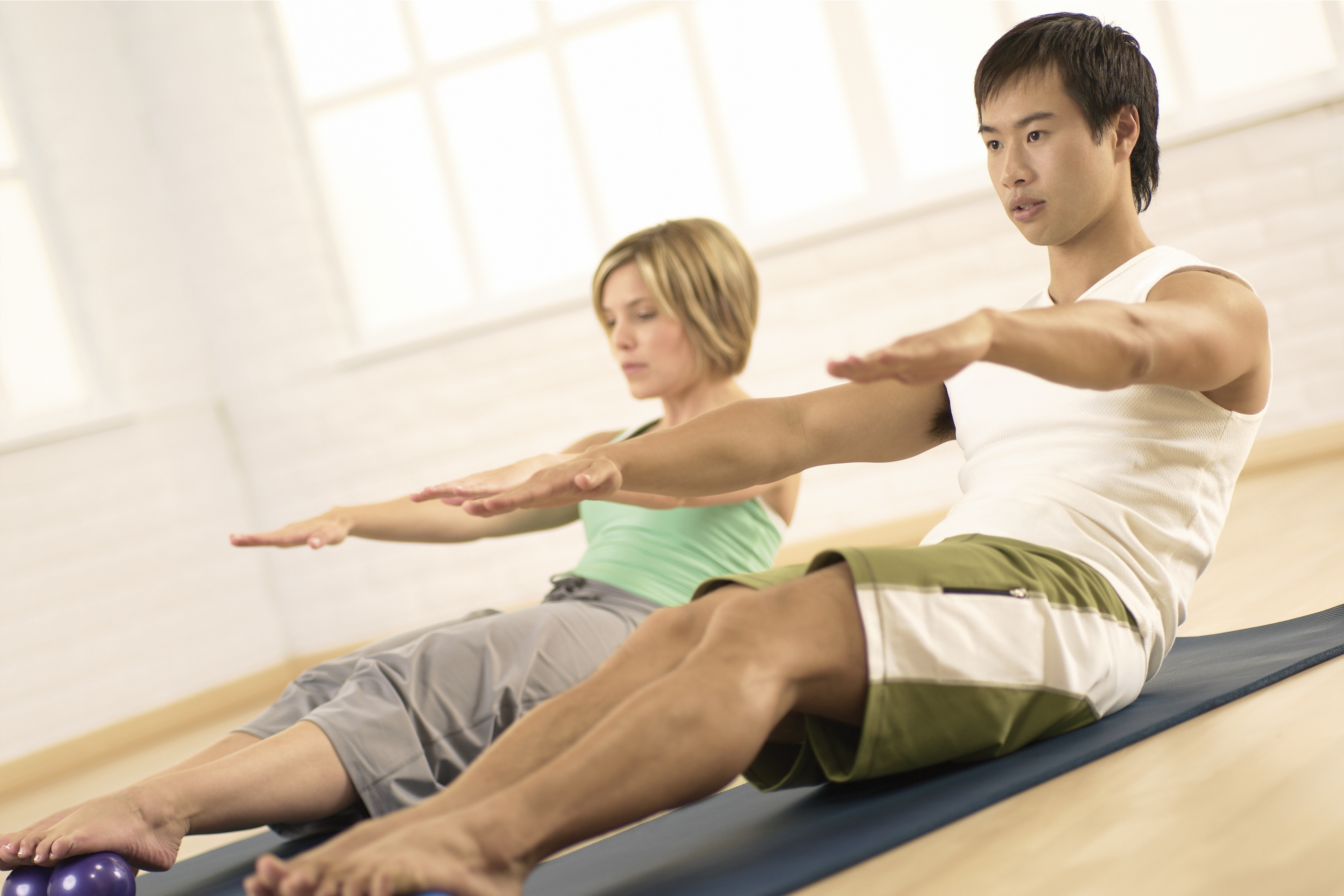
You wouldn't believe it, Pilates is for men too!
Many people think that Pilates is an easy women's exercise, but that's not the case! What's more, it was developed by a man, Joseph H. Pilates. But let's see why we can recommend this form of exercise to gentlemen!
- Joseph H. Pilates (1883-1967), the developer of the method, was a sickly child (asthma, rheumatism, rickets), which is why he started to deal with health. He became a successful gymnast, boxer, circus artist, and even an anatomical model. In 1912, he moved to England, where he also trained Scotland Yard. During World War I, he was interned in a camp, where he also had his fellow prisoners perform his exercises. A notable result of this was after the 1918 Spanish flu epidemic, when he and his companions all escaped unscathed. Before the end of the war, he was transferred and assisted nurses in a hospital. He helped the rehabilitation of injured soldiers by attaching springs and ropes to hospital beds. To the doctors' astonishment, they recovered significantly better and got back on their feet faster than others. These modified hospital beds later evolved into special Pilates machines (Reformer, Cadillac, Stability Chair – on Pilates machines, we can work our muscles from head to toe. We work with springs, i.e., continuously changing resistance, sitting, lying, kneeling, standing on the machine). After the war, he returned to Germany, where he continued his work. In Hamburg, he helped the police with his method, but when he was asked to train the German army, he emigrated to the USA and became an active participant in American ballet and sports life. He met his wife on the ship to America, with whom he later opened their first studio in New York City. He gained immense popularity; his was America's first "fitness center," and during his career, he developed more than 500 different exercises, from which exercise sequences suitable for everyone's physique and fitness level can be compiled. One of the specialties of the method is that we initiate movement sequences "from the head," thereby achieving better body awareness and control.
- Whether you are a woman or a man, it is equally important to strengthen your core stabilizing muscles. The deep back muscles running on both sides of the spine and the abdominal muscles are responsible, among other things, for the health of the spine. Since gravity constantly compresses us day by day, it burdens the discs and small joints with the body's own weight. If the core stabilizing muscles are not strong enough, it can quickly lead to joint wear, disc herniation, pain, and musculoskeletal problems. In Pilates, proper strengthening of the core stabilizing muscles is always emphasized, which is responsible for our posture, contributes to a balanced musculoskeletal system, and helps maintain the healthy double S-shape of our spine.
- Pilates is perfectly suitable as a standalone workout, but also for complementing other sports. Thanks to the exercises performed, those muscles that you don't often use will quickly strengthen. For example, I play tennis. I hold the racket with my right hand, I use this side more, so my right side is stronger. Also, the front part of my shoulder is stronger than the back part due to the strokes. Therefore, in Pilates, I emphasize strengthening my left side to match my right, and the back of my shoulder to match the front (after a few injuries and several months of shoulder pain, I experienced firsthand how important this is so that I can play and live my passion… J As a result, I found on the court that my strokes became stronger, and my shoulder doesn't hurt. By strengthening the core and coordinating both sides, I became faster and more explosive on the court. Because of the abdominal muscle strengthening, I can reach the ball sooner, prepare the stroke faster, and hit it harder. This is how we can support your goals to improve your performance and make your movements more conscious.
- During a Pilates class, the entire body is trained, meaning all your muscle groups are thoroughly worked. The workouts are not boring at all, as countless exercises and equipment are available to ensure you have a varied and comprehensive movement session. During the guided exercises, the instructor observes your every movement and, very importantly: corrects it. This is what makes this type of movement truly effective – you don't perform the movements choreographically with the muscle that is already strong – meaning you don't just compensate – but you engage the weaker muscles, strengthening them to the stronger parts of your body, which leads to muscle and joint balance, and thus to healthier, more harmonious movement.
- It usually takes a few sessions to get used to how we move and hold things in our classes. But the more you get the hang of it, the more you learn to treat your body in a different way, to pay attention to its signals differently, the more enjoyable the whole thing becomes! And as we progress from beginner to advanced level, the exercises also become more challenging in terms of strength, dynamics, balance, or flexibility. What I really love about it is that even a beginner exercise is not boring if I perform it with real attention, because the more the muscle strengthens and the brain-nerve-muscle coordination becomes established, the more I feel what is happening with my body, making it easier to pay attention and engage the muscle. However, if I really pay attention, it will strengthen more and more, pulling me into a positive spiral. I have more and more "AHA" moments when I suddenly feel what the instructor has been talking about all along, and my movement becomes much lighter. So, it's okay that our health is important, it's pouring in from everywhere. You've probably heard this elsewhere too. It really is, and I don't want to argue with that. I consider myself lucky to have discovered Pilates and to be able to introduce it to others. It's a form of exercise with which, in addition to doing a lot for your health, is also fun and enjoyable (although many of my guests only genuinely smile when at the end of the class they hear: "cheers" or "to your health"). But what I also really love about it is that it's a little "coffee break" for my brain and nervous system. Through this, it helps reduce daily stress. I have to pay so much attention to what I'm doing during the class that there's simply no time to think about anything else. Neither about what else needs to be done that day, nor about what to buy, what to cook, what to arrange, pay, etc… I often call it a kind of active meditation, because you are forced to be in the present and focus on what you are doing, because if not, it immediately shows in your movement. If you desire personalized training, we recommend individual classes; if you like group dynamics, then join our Pilates class with a maximum of 8 people.