
Why is Pilates good as a supplementary workout?
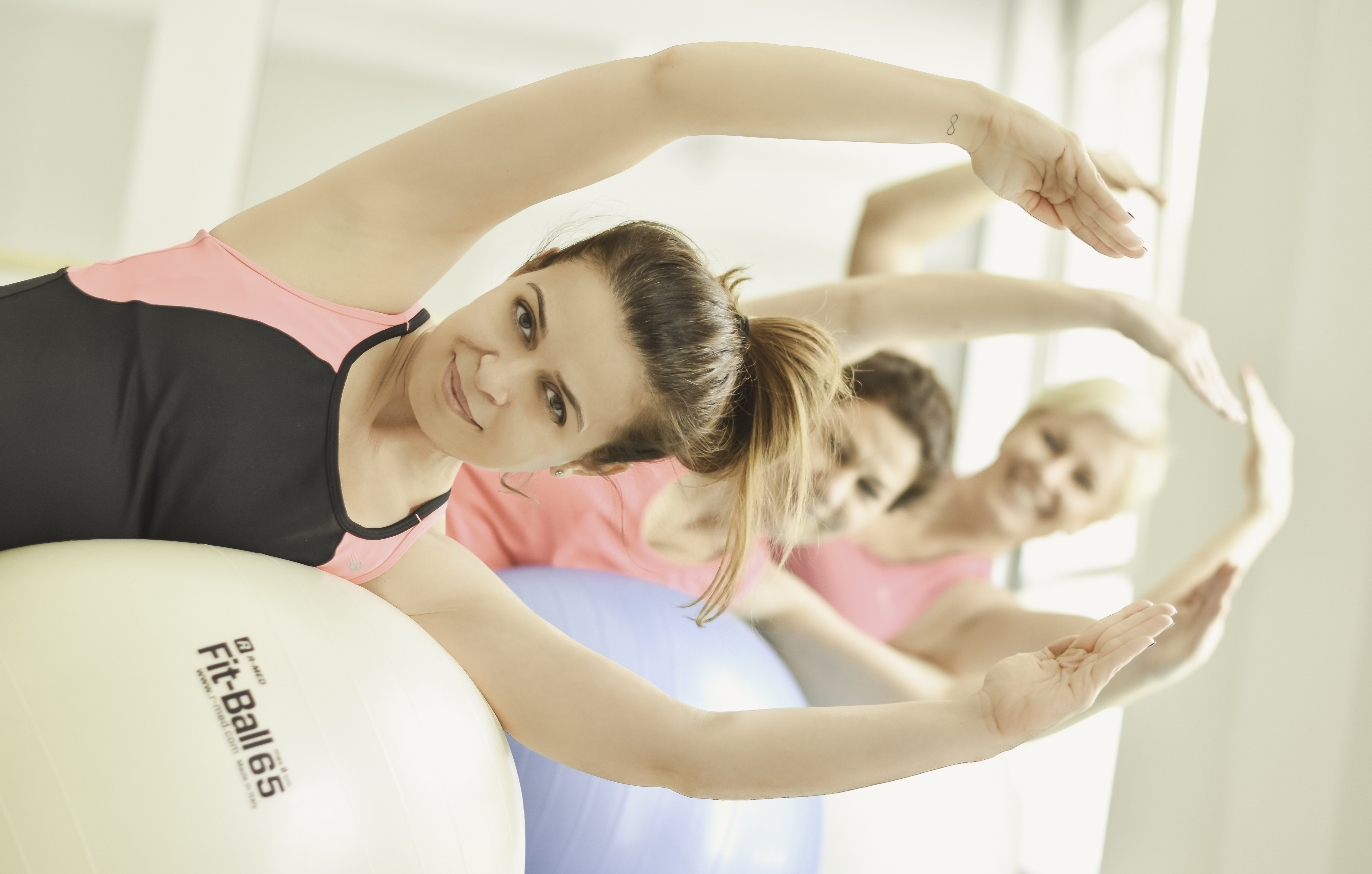
Why is Pilates a good complementary workout?
If you have a chosen sport that you have been practicing for years, it also means that you have been performing the same exercises and movement sequences for years. It is natural that certain muscles and muscle groups of your body develop and strengthen accordingly.
In many cases – such as in basketball – this involves a one-sided movement, meaning our throwing hand and the jumping leg on the opposite side become stronger. Due to specific muscle usage, we overuse some muscles and underuse others. The result of this is that the overused muscles pull the joints out of place, which can lead to musculoskeletal pain or injury in the long run. Functionally, a muscle spans one or two joints and moves them. If our biceps, for example, is too short in the upper arm, we cannot fully extend our arm. Asymmetry in the muscles on both sides of the spine can even pull our vertebrae to one side. The opposite side naturally tries to keep the joint in place, but since this is the weaker side, it tires more quickly, and sooner or later muscle spasms and pain appear.
During Pilates, it is possible to strengthen and stabilize weak muscles, thus preventing the development of pain or reducing the intensity of existing pain.
At the same time, we also perform stretching exercises in Pilates classes. In fact, I would rather say that we strengthen while stretching. Thanks to the exercises performed, stronger musculature develops. How can this be? Let's look at an example to understand why stretching is important and what we mean by strengthening through stretching.
If our musculature is 2 cm shorter compared to a muscle of normal length, its contraction will also be smaller. However, if we stretch it back and the muscle strength is maintained, we achieve a greater contraction, as we increase the lever arm. In Pilates, due to controlled muscle work, we also utilize the stretching phase. (Very briefly and simply put: a muscle can work by shortening, or lengthening, or when you statically hold something in place and the muscle length does not change). So, imagine we grab a bottle of water because we are thirsty. We bend our arm when we lift the bottle to our mouth. In this case, the arm flexor muscles shorten. While we drink, we hold the bottle in place, the muscle length does not change, we just hold it. Gravity would pull our arm down, so when we put the bottle back on the table, the arm flexor muscle also works while lengthening. In Pilates, the main muscle work is often in this last phase, which is why there is often no separate stretching at the end of the classes. However, if you want to work specifically on your flexibility, I also recommend our stretching classes, where we focus on stretching the muscles.