
Conscious movement
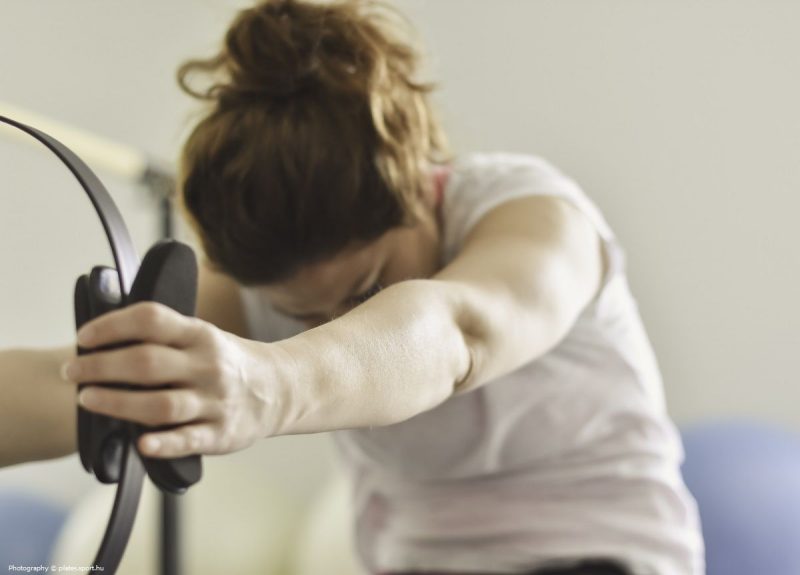
How often do you consciously move each day? For a few minutes? For hours? All day? Or almost never? Most of us perform daily tasks automatically. We don't think about which foot to place in front of the other when we walk. We don't pay attention to which muscles are moving when we get out of bed. We paid attention to which pedal to press when in the car until we learned it. But after a few weeks of active driving, even this becomes automatic.
How can the body and mind become so disconnected? And what can be done to reconnect the two?
Let's say you found a Pilates instructor with whom you meet four times a week. Before that, for many years, you went running every other day. And while running, you thought about everything except what you were doing. Usually, you didn't even notice what was happening around you. In the half hour you were running, you had already mentally shopped for dinner, cooked, figured out what to wear to Saturday's party, and decided whether to go home for the holidays. Meanwhile, your body worked like a machine. Like when you put lunch on to cook while you're doing something completely different.
You arrived at your first Pilates class with similar expectations. You did everything your instructor told you to do. Whether you paid attention to what you were doing is another question. You were a little disappointed because those fantastic effects everyone talks about didn't materialize. By the second class, a routine began to develop, but you didn't notice it because as soon as you walked through the door, you switched off your brain. The exercises were the same as in the previous class, but you still needed every little detail explained to you again. The name of the exercise, the breathing technique, the necessary movements…
Every class was like the very first one, and progress just wouldn't come.
Why?
Because Pilates is not just a simple exercise program. It's not like running or cycling, where you turn on your favorite music or start your series. In Pilates, you have to concentrate on what you're doing. You need to know what movements are involved in each exercise and what the sequence is. If you don't pay attention to body mechanics, movement technique, and breathing, you won't feel the effects!
If you absolutely can't remember, take notes! Between exercises, during breaks, or after your workout. It doesn't matter how you get used to moving consciously, the point is to get used to it. You'll soon realize it's not as impossible as you initially thought.
And once you experience the silence and calm that comes with proper Pilates practice, you'll never want to go back to your old habits!
Yes, it seems very easy at first, and yes, it's very surprising when you encounter the many rules and principles you have to adhere to. Is it easier to simplify things by cheating a little? But is it worth it? No!
If you don't believe it, feel free to go back to running, but don't be surprised if you suddenly sprain your ankle because you weren't paying attention to where you were stepping.
Don't be afraid of challenges! You just need to pay a little attention. Start with the most important thing, breathing. Once that comes naturally, try to improve your concentration. If you can block out all stray thoughts and focus only on your breathing, controlling your body will also become easier. And as your coordination improves, you will become more precise. You will realize that every movement originates from your core muscles, and you will learn to centralize your strength. In a short time, you will experience that you have achieved the much-talked-about flow. You will perform the exercises easily, safely, and correctly.
Pay attention and make conscious decisions with every activity. You will soon notice that your brain will be more closely connected to your body not only during Pilates class but also in your daily life.