
10 Surprising Benefits of Pilates
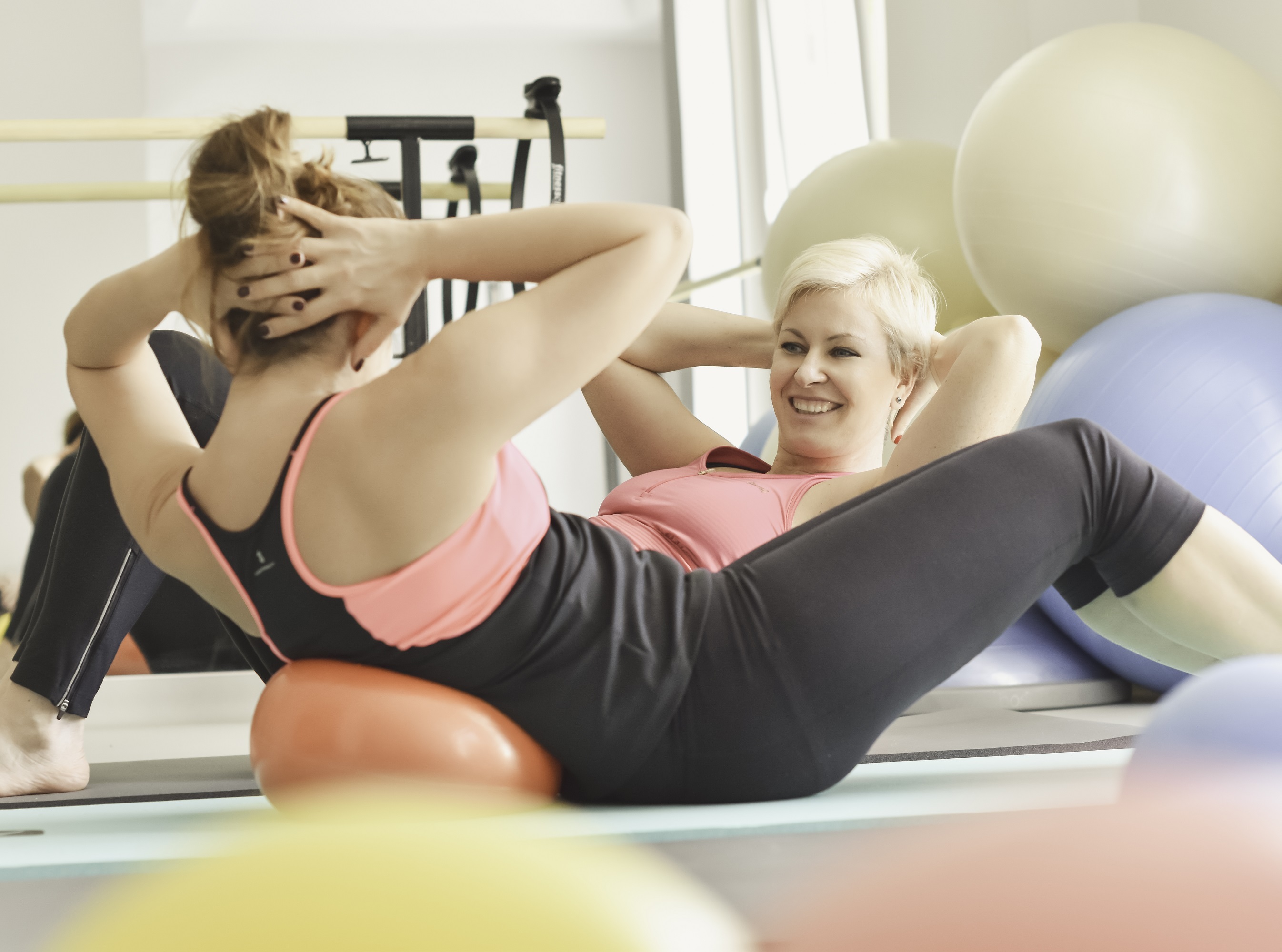
Most people associate Pilates with a flat stomach and a slender body, but the benefits of Pilates are much broader. If we exercise regularly, in addition to aesthetic benefits, we can even reduce pain, improve bone density, etc. It is precisely because of its numerous benefits that Pilates is a perfect transitional workout, but it can also stand on its own.
What are the benefits of Pilates, besides helping us achieve a shapely, toned body? Read on to find out!
1. Improves bone density
Indeed, not only milk can contribute to bone health! And although strength training is known for its positive effects on bone density, Pilates is not far behind. “Bone, like muscle, is dynamic tissue and responds to resistance and weight-bearing in the same way. With resistance training, we can work on both muscles and bones simultaneously. Resistance in Pilates is created by springs and bands,” says Elizabeth Ordway, a Pilates instructor.
2. Contributes to weight loss
To lose about half a kilo per week, we need to achieve a daily calorie deficit of 500 calories. This can be achieved in two ways – one is calorie burning through exercise, the other is calorie deficit achieved through diet. Whichever method we choose, Pilates helps us in both cases. With Pilates, we burn 4-8 calories per minute, according to research by Michelle Olson, Ph.D. For weight loss, Olson recommends 4-5 times a week of moderate-intensity exercise lasting 45-60 minutes, supplemented with warm-up and stretching.
3. Relieves back pain
Research from the Journal of Orthopedics & Sports Physical Therapy (it sounds terribly serious because it is) found that those suffering from back pain experienced significant improvement by adhering to a four-week Pilates program for a year. “Pilates supports the back by strengthening the core, improves posture, and gently stretches muscles stiffened by poor posture,” says Ordway. In addition, Pilates also corrects hidden imbalances. Most often, these imbalances are responsible for back pain. There are Pilates exercises specifically designed to alleviate pain.
4. Strengthens the core
The time for crunches is over! Pilates is much more effective in building abdominal muscles. “The foundation of Pilates lies in the abdominal muscles, as we engage them in every exercise,” says Christa Gurka, founder of a Pilates studio. In addition, Pilates also works the deeper muscles, specifically through breathing. Just try the breathing technique used in Pilates a few times, and you will already feel the muscle soreness.
5. Reduces the risk of injuries
Pilates improves flexibility and balance, and increases strength. All these factors help prevent injuries. “If we increase the flexibility of our knee ligament by just 10 degrees, the chance of injuring our back while bending down for something will be much smaller,” says Gurka. “Greater strength results in more dynamic movement control, which minimizes injuries.” In addition, unilateral exercises increase balance, thereby reducing the risk of falls. Last but not least, Pilates develops movement patterns that can reduce the pressure placed on joints, tendons, muscles, and ligaments.
6. Increases flexibility
When performing most exercises, we repeat the same movement over and over again (take crunches as an example). In the case of Pilates, however, the movement is not monotonous. “Pilates stretches, contracts, rotates outwards and inwards, and bends the spine to the right and left, thereby increasing the range of motion,” says Gurka.
7. Excellent transitional workout program
If we constantly perform the same workout program, we can easily overload certain muscles, thereby increasing the risk of injuries. Incorporate a few Pilates exercises into your routine. This will make you stronger and you will get bored of the exercises much slower. Pilates exercises can be static (performed standing or lying down), and there can be those that require stability and positioning. Both types can be an excellent addition to an existing workout program, as they move the entire body, but only work a specific muscle group. This way, we can rest the muscles that we strained during the previous workout.
8. Improves posture
When we sit in front of the computer all day, it is natural for our back to slouch. Over time, this leads to muscle imbalance. Pilates can reverse the consequences of this bad habit. Pilates results in better muscle symmetry and balance. Since its exercises focus on a specific muscle group, it allows us to work on our weaker muscles as well.
9. Increases endurance
As with most forms of exercise, the cardiovascular effects in Pilates depend on the intensity at which we perform the exercises. Some advanced exercises significantly speed up the heart rate, while beginner, mat-based tasks have no effect on our heart rate. Advanced courses typically increase the heart rate to 120-130. Reducing rest time and movement between exercises also contributes to increasing endurance.
10. Works the abdominal muscles
Whether a six-pack or a flat stomach is the goal, Pilates can help achieve it (provided we also adjust our diet a bit to get rid of excess belly fat). Pilates is extremely effective in activating the abdominal muscles. The results of the research are simply incredible – a Pilates exercise is 245 percent more effective in shaping the external obliques than traditional crunches.
Well, what do you think? Is Pilates worth trying? If so, don't hesitate, you can sign up for an individual or group class today!